
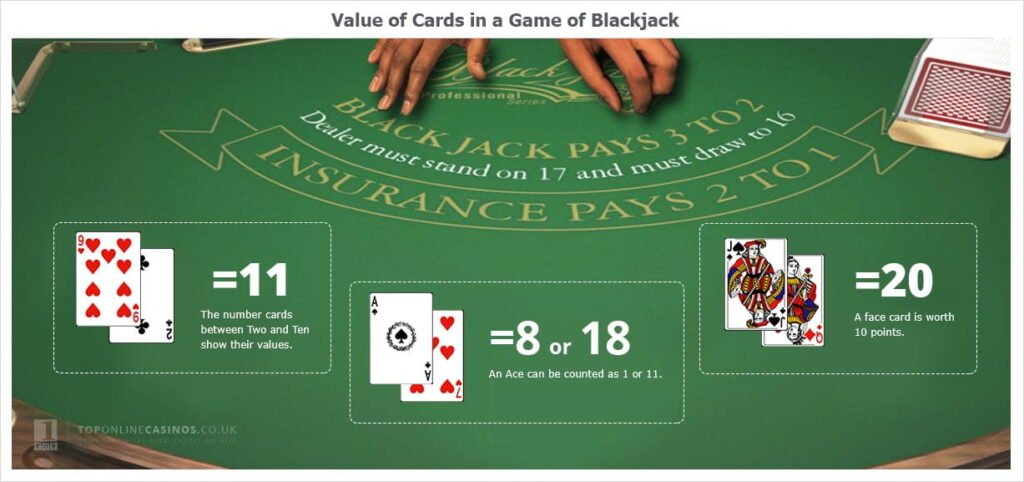
Blackjack is the only table game where a regular player can realistically get close to “even” with the house, but only if they stop playing it like a guessing game and start treating it like a repeatable system. This guide skips the fluffy history lesson and goes straight to what actually moves the needle: rules, decisions, money, and mindset.
Step 1: Pick the Right Blackjack Game
Most players lose before the first hand because they sit at a bad table. A “good” blackjack game is one where the rules keep the house edge low so your skill actually matters.
Look for these core rules:
- Dealer stands on soft 17 (S17), not hits it (H17). H17 alone adds about 0.2% to the house edge.
- You can double down on any 2 cards (not just 9–11), and double after split is allowed.
- Blackjack pays 3:2, never 6:5; 6:5 turns a “beatable” game into a slow drain.
If a table has H17, no double after split, and 6:5 payouts, it is effectively a side‑show – fine for fun, terrible for serious play.
Step 2: Play a Simplified Winning Strategy (Not Your Gut)
Perfect basic strategy comes from computer simulations of millions of hands that find the mathematically best move for every situation. You don’t need to memorise 15 charts; you need a compact rule‑set that gets you 90–95% of the way there.
Use this no‑fluff, table‑ready version (for multi‑deck, dealer stands on soft 17):
- Hard hands (no Ace counting as 11)
- Always hit 11 or less.
- On 12–16:
- Stand if dealer shows 2–6 (“dealer in trouble”).
- Hit if dealer shows 7–Ace (“dealer strong”).
- Always stand on 17 or more.
- Soft hands (Ace counts as 11)
- Hit soft 17 or less.
- Soft 18:
- Stand vs 2, 7, 8.
- Double vs 3–6 if allowed; otherwise hit.
- Hit vs 9, 10, Ace.
- Soft 19+ – stand.
- Pairs
The key is consistency: making the same mathematically correct decision every time is what drags your results towards the true long‑term expectation instead of random swings.
Step 3: Bankroll and Bet Sizing That Actually Protect You
Most “strategy” articles ignore the part that really decides whether you walk away broke: how much you bring and how you bet it. Blackjack is a fast game; without structure, your bankroll evaporates.
Use this practical bankroll framework:
- Treat your blackjack bankroll as disposable entertainment money; never mix it with rent, bills, or savings.
- Bring at least 50–100x your average bet for a serious session (e.g. £5 bets → £250–£500 bankroll) to survive normal variance.
- Bet flat (same stake each hand) or only increase when you are ahead; avoid systems that force bigger bets when you’re losing (Martingale etc.).
Set hard limits before you play:
- Loss limit per session (e.g. lose 50% of your session roll and you walk).
- Win target (e.g. up 50–100% and you cash out), so you don’t give everything back chasing “just a bit more”.
Step 4: Understand Card Counting Without Becoming a Movie Hero
Card counting is not about “remembering every card”; it is about tracking whether more high cards (10s, Aces) or low cards have left the shoe. When the shoe is rich in high cards, the player’s edge rises; when it is rich in low cards, the house regains its advantage.
- 2–6 = +1
- 7–9 = 0
- 10–A = −1
Every card dealt changes the running count by its value; then you divide by decks remaining to get a “true count” that tracks how favourable the shoe is. When the true count rises above +1, the player can have a genuine edge if they raise their bets; at 0 or negative, they should bet small.
Worth knowing:
- In a standard shoe game, basic strategy alone still leaves the house with a small edge, roughly a few tenths of a percent.
- Efficient counting with proper bet ramping can swing that into a small player edge, but it demands discipline, anonymity, and a lot of practice, and casinos actively watch for it.
Even if you never count seriously, just knowing why the deck composition matters helps you understand where the edge actually comes from instead of believing “streaks” or table superstitions.
Step 5: Mindset and Mistakes That Quietly Kill You
Most of the money the casino makes at blackjack doesn’t come from the rules – it comes from human error. People chase losses, tilt after a bad run, ignore their own rules, and turn a small edge against them into a big one.
Avoid these profit‑killing habits:
- Deviating from your strategy because of “hunches” or short‑term streaks. The maths doesn’t care what happened in the last three hands.
- Upping stakes in anger after a bad beat instead of according to your pre‑set plan.
- Playing tired, drunk, or distracted; blackjack hands are cheap, but decisions compound fast.
Replace them with winning habits: