
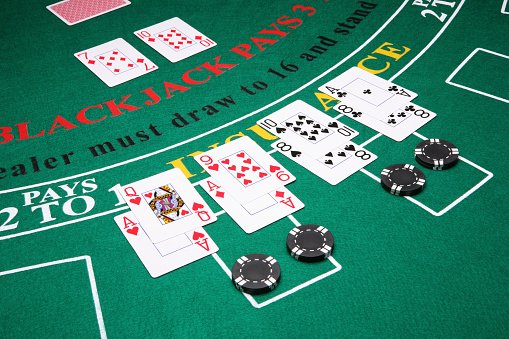
Playing blackjack professionally is not about lucky streaks, hunches, or “feeling it.” It’s about turning a simple casino game into a structured, disciplined operation where you grind out small edges and protect your bankroll like a business asset. If you’re willing to treat it like work instead of a night out, you can get surprisingly close to professional‑level play.
In this guide, I’ll walk through the fundamentals you actually need: the rules you must insist on, basic strategy, bankroll and bet sizing, card counting foundations, and the mental discipline that separates serious players from weekend gamblers. By the end, you’ll understand how a professional thinks at the blackjack table – and how to start moving in that direction yourself.
Generated chart: blackjack_decisions.png
1. Know the Rules You’re Playing (Or Walk Away)
You can’t play blackjack professionally if you don’t care about the rules. Small rule tweaks swing the house edge more than most people realise, and professionals are ruthless about game selection.
Look for games with as many of these conditions as possible:
- 3:2 payout on blackjack
- Dealer stands on all 17s (S17), not hits soft 17 (H17)
- Double after split allowed
- Doubling allowed on any two cards, not just 9–11
- Late surrender available (optional but nice)
- Fewer decks (single and double deck are best, 6–8 deck is common but still beatable with the right conditions)
Each bad rule you accept (6:5 payouts, H17, no DAS, restricted doubling) pushes the game further away from being beatable. Professional‑minded players simply don’t sit down at poor tables if they intend to make money long‑term.
Before you even think about “playing professionally,” make it a habit: scan the table rules, know the house edge impact, and be ready to stand up and walk if the game is weak.
2. Master Basic Strategy Until It’s Boring
You can’t play blackjack professionally without perfect basic strategy – not “most of the time,” not “roughly.” Every wrong hit, stand, double or split costs you money and kills your edge.
Basic strategy does one thing: it tells you the mathematically best move for each player hand vs dealer upcard, assuming no card counting. That alone can reduce the house edge to around 0.5% or better on decent rules.
Key ideas you must internalise:
- Hard totals
- Always hit hard 8 or less.
- Hit 12 vs dealer 2 or 3, stand 12 vs 4–6, and hit vs 7+.
- Stand on 13–16 vs dealer 2–6, hit vs 7+ (barring surrender in some charts).
- Soft totals (hands with an ace counted as 11)
- Soft 13–17 (A,2 to A,6): usually hit; double vs certain weak dealer cards (like 4–6) where allowed.
- Soft 18 (A,7): stand vs dealer 2,7,8; double vs 3–6; hit vs 9,10,A in many charts.
- Soft 19+ usually stand.
- Pairs
- Always split A,A and 8,8.
- Never split 5,5 (treat as 10, double where appropriate).
- Never split 10,10.
- Other splits (2,2; 3,3; 6,6; 7,7; 9,9) depend on dealer upcard.
At the table, professionals don’t “think about” basic strategy – they execute it automatically. If you’re still hesitating, flipping a mental coin between hit or stand, you’re not there yet. Drill it at home with apps, charts, or online trainers until it feels completely natural.
The simplified decision‑flow graphic below shows the high‑level logic (not a full chart) a pro uses when deciding between hit, stand, double or split:
Use this style of flow as a mental model, then back it up with full basic strategy charts for your exact rule set and deck count.
3. Bankroll Management: Treat It Like a Business, Not a Weekend
Professional blackjack players don’t sit down with “whatever’s in their pocket.” They bring a dedicated bankroll – money ring‑fenced just for blackjack – and they size their bets to avoid going broke during inevitable downswings.
Core principles:
- Separate bankroll from life money
- Your blackjack bankroll should not be rent, food, or emergency money.
- Treat it as business capital.
- Use conservative bet sizing
- A common professional approach is betting 0.5–1% of total bankroll as a standard unit in advantage situations.
- For example, with a £10,000 bankroll, one betting unit might be £50–£100.
- Accept variance and downswings
- Even with an edge, you can lose for many hours or sessions.
- The goal is to avoid sizing bets so high that one bad run wipes you out.
If you’re sitting down with £200 and betting £25 a hand with no plan, you’re not thinking like a professional. Pros think in units, risk of ruin, and long‑term expectation, not “Can I double this in an hour?”
4. Card Counting 101: Turning the Game in Your Favour
Basic strategy alone gets you close to break‑even on good games, but it doesn’t turn you into a winning professional. The real magic is in card counting, which tells you when the remaining deck is rich in high cards (favouring the player) or low cards (favouring the house).
The classic entry‑level system is Hi‑Lo:
- Cards 2–6 = +1
- Cards 7–9 = 0
- Cards 10, J, Q, K, A = –1
You keep a running count as each card is dealt:
- When the count is high positive, more low cards have already been played, so the remaining deck is richer in 10s and aces. That’s good for you (more blackjacks, more dealer busts).
- When the count is negative, the shoe is full of small cards and you’re at a disadvantage.
In multi‑deck games, you convert the running count to a true count (running count divided by decks remaining). Your betting and sometimes playing decisions (deviations from basic strategy) are then based on that true count.
Professionally minded rhythm:
- Low/negative counts: minimum bet, pure basic strategy.
- High positive counts: increase bet size (within your bankroll plan) and apply a small set of count‑based deviations (e.g., standing on 16 vs 10 at certain counts, taking insurance only when the count is strongly positive).
Card counting isn’t about remembering every card; it’s about calmly tracking the ratio of high to low cards and using it to press your edge only when it exists.
5. Professional Bet Sizing and Spreads
Once you’re counting competently, the next professional step is your bet spread – how much you increase your stake when the true count rises.
Typical professional approach in a shoe game:
- True count ≤ 0: bet 1 unit (table minimum or your personal minimum).
- True count +1: bet 2 units.
- True count +2: bet 4 units.
- True count +3 or higher: bet 6–8+ units (depending on tolerance and heat).
Example with a £25 base unit:
- Low/neutral counts: £25.
- Modestly positive counts: £50–£100.
- Strongly positive counts: £150–£200+.
The idea is simple: risk little when the house edge is strong, risk more when you have the edge. The art is doing this smoothly enough not to attract unwanted attention from the casino (pit bosses don’t like obvious counters) while still achieving a meaningful overall edge.
A professional doesn’t chase losses or randomly double a stake out of frustration; every bet level is tied to the count and bankroll rules.
6. Playing Like a Pro at the Table: Behaviour and Discipline
Professional‑level blackjack is as much about behaviour as maths. The casino environment is designed to push emotional buttons; your job is to be unmoved by short‑term swings.
Key habits:
- Emotional neutrality
- Don’t celebrate big wins or sulk after bad beats.
- Keep the same routine, win or lose.
- No side bets
- Side bets like Perfect Pairs or 21+3 are almost always bad value.
- Pros avoid them unless they’ve explicitly worked out an edge (very rare for casual players).
- Session discipline
- Have a rough plan: how long you’ll play, when you’ll take breaks, and when you’ll walk away.
- Avoid drinking while playing seriously – casinos comp drinks for a reason.
- Camouflage (when needed)
- Mix in small table talk, don’t stare at the discard tray like a robot.
- Occasionally flat‑bet a few rounds at a medium count if the pit is watching you closely.
Treat the table like your workplace. You’re not there to show off or chase thrills. You’re there to execute a process.
7. Common Mistakes That Kill “Professional” Hopes
Even players who know basic strategy and dabble in counting fall into traps that destroy their edge.
Big ones to avoid:
- Deviating from strategy because you’re “due” a win
- Increasing bets out of frustration rather than count‑based logic
- Playing poor rules out of convenience
- Mixing bankrolls (using life money to top up a bad run)
- Playing tired, drunk or distracted
If you catch yourself saying “I’ll just go with my gut on this one,” you’ve already stepped away from professional thinking. Pros don’t guess; they follow tested decisions, even when it hurts in the short term.
Final Thoughts: Professional Mindset Over Professional Label
Not everyone needs – or wants – to be a full‑time professional blackjack player. But you can absolutely play like a professional: choose good games, follow basic strategy perfectly, manage your bankroll, and only press your bets when you genuinely have the edge.
Use the decision‑flow graphic as a simple reminder of the logic behind your moves, but build your real strength on detailed basic strategy charts and a solid counting system. Over time, your results will start to look less like random swings and more like the product of a plan.
If you’re serious about it, start by tightening up your strategy and discipline on your next session before you worry about being “pro.” The professional level isn’t a label the casino gives you – it’s a standard you set for yourself at the table.