Learning how to play craps is one of the fastest ways to turn from an intimidated onlooker into the most confident person at the loudest table in the casino. Once you understand a handful of core bets and the basic flow of the game, the noise and jargon suddenly make sense and you stop worrying about looking silly.
This guide breaks craps down the way experienced players explain it to friends: plain English, only the bets that matter, and some honest talk about what actually happens when you walk up to a table for the first time. By the end, you will know how to play craps confidently, which bets to use, which to avoid, and how to protect your bankroll so the game stays fun.
Craps in Plain English: What’s Actually Going On
At its core, craps is just a dice game. Two dice, a table, and people betting on what numbers will show up. The reason it looks chaotic is because the table allows many different bets at once, so everyone around the layout can be doing something slightly different on the same roll.
Here’s the simple version of how a normal game flows:
- One player is the shooter and throws the dice.
- The first roll is called the come‑out roll.
- Depending on what is rolled, a point might be set (4, 5, 6, 8, 9, or 10).
- Once there is a point, the table is “trying to hit the point again before a 7 appears”.
Every other bet is layered on top of that basic idea. When you ignore the shouting and side bets and focus on that core, the whole game gets much easier to follow.
Personal insight:
The first time sitting at a live craps table, the mistake is often trying to understand every bet on the felt. Instead, ignore 80% of the layout. Focus on the Pass Line, the point, and the 7. Once that clicks, the rest becomes optional extras rather than required knowledge.
The Craps Table Layout: Safe Zones vs Danger Zones
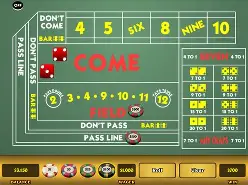
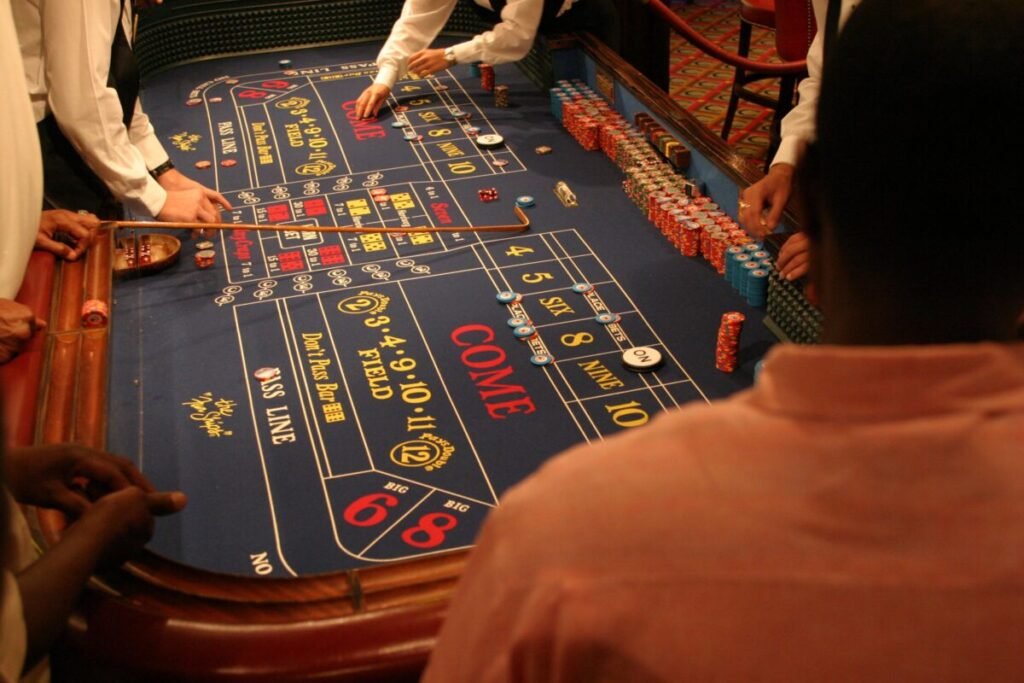
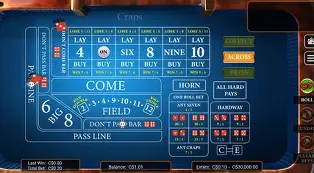
The craps layout is designed to look busy, but most beginners only need a few key areas. Think of the table as having “safe zones” (low house edge bets) and “danger zones” (expensive long‑shots in the middle).
- Pass Line – front edge of the table.
- Don’t Pass – usually just above/below the Pass Line.
- Come and Don’t Come – boxes near the middle edge of the layout.
- Place Bets on 6 and 8 – in the number boxes at the top.
These are where most smart money lives and where the lowest house edges are found.
Danger zones for beginners:
- The centre area with Any 7, Any Craps, Horn, Hardways, and other proposition bets.
- Big, tempting labels like “Field” that pay flashy odds on certain numbers but have a noticeably higher house edge.
You are not missing out by skipping the middle of the table at the start. You are avoiding the bets that quietly chew through your bankroll while the casino smiles.
Step‑by‑Step: Your First Craps Round
Understanding how to play craps starts with seeing one full round from start to finish. Let’s walk through a typical sequence with you as a brand‑new player at a low‑stakes table.
1. Buying in and getting chips
At a live table, wait for a roll to finish, place your cash on the layout (never hand it directly to the dealer), and say something like “change please”. The dealer will give you colour‑coded chips and you are now in the game. Online, you just choose your stake and click into the table.
2. The come‑out roll and the Pass Line
For a straightforward first session, start with the Pass Line bet:
- Place your chip(s) on the Pass Line before the come‑out roll.
- If the shooter rolls 7 or 11, you win even money.
- If they roll 2, 3, or 12 (called “craps”), you lose.
- If they roll 4, 5, 6, 8, 9, or 10, that number becomes the point.
Now the mission of the table is simple: the shooter wants to roll that point number again before rolling a 7.
3. After the point is set
- If the shooter hits the point again, Pass Line bets win.
- If a 7 appears first (called “seven‑out”), Pass Line bets lose, the round ends, and a new come‑out roll begins with a new shooter if required.
During this time, you can add other bets (like Come or Place bets), but as a beginner you could happily just ride the Pass Line and watch.
Example from the felt:
Imagine the come‑out roll is a 9. The dealer calls “nine, centre field nine – that’s the point”. The puck moves to 9. You have £5 on the Pass Line. Over the next few rolls you see numbers like 4, 6, 10 show up, but nothing happens to your Pass Line chip. When a 9 finally hits, your Pass bet wins; if a 7 had landed first, you’d lose and the round would reset.
The Smart Bets: How To Play Craps Without Burning Money
There are many bets available, but only a few that make sense consistently if you care about value. Knowing how to play craps well means building your game around these low‑edge options.
Pass Line and Don’t Pass
- Pass Line: House edge around 1.41%.
- Don’t Pass: You are essentially betting against the shooter, with a house edge around 1.36%.
Both are solid foundation bets, with Don’t Pass being slightly better mathematically but less popular socially because you are cheering for the table to lose.
Come and Don’t Come
These work like Pass/Don’t Pass but after the point has already been set.
- A Come bet acts like a fresh Pass Line bet starting on the next roll.
- A Don’t Come bet acts like a fresh Don’t Pass bet.
They give you more numbers working for you at once, which can be useful when you’re comfortable with the flow.
Odds bets: the best bet in the house
Once your Pass or Come bet has moved to a number, you can usually place Odds behind it.
- Odds bets pay at true odds (no house edge) because they win or lose along with your main bet.
- Payouts vary by number: for example, 6 and 8 pay 6:5 on Odds, 5 and 9 pay 3:2, and 4 and 10 pay 2:1.
Casinos limit how many times your base bet you can place as Odds (e.g. 2x, 3x, 5x). Mathematically, stacking as much as you can on Odds while keeping the base bet modest is one of the most efficient ways to bet.
Bets to Treat with Caution (or Avoid)
The game does not hide the bad bets; it just decorates them nicely. Part of mastering how to play craps is recognising which options are pure entertainment rather than sound decisions.
High‑edge traps
- Field bet: Wins on some numbers (like 3, 4, 9, 10, 11), might pay double or triple on 2 or 12, but still carries a higher house edge than core line bets.
- Any Craps, Any 7, Horn, and other proposition bets: single‑roll bets in the middle of the table with very high house edges (often 9–17% or worse).
- Hardways (hard 4, 6, 8, 10): fun for sweats, but again priced heavily in the casino’s favour.
There is nothing “wrong” with throwing the occasional £1 on a long‑shot if you treat it as entertainment, but building your strategy around these is a fast route to reloading your account.
Personal insight:
A common pattern at the table is someone buying in for £100, putting £5 on the Pass Line and £20 scattered all over the centre. When the roll goes against them a few times, the Pass bet might only be down £15–20 while the props have torched £60+. Simple, boring bets keep you in the game.
The Maths: Odds, House Edge and Why No System Can Beat It
If you really want to understand how to play craps like a long‑term player, you need a basic grip on house edge. That is the average percentage the casino expects to win from each bet over a very long sample.
- Pass Line: ~1.41% edge.
- Don’t Pass: ~1.36%.
- Place 6 or 8: ~1.52%.
- Field and many props: often 5–10%+ and sometimes higher.
The important thing to realise is that no betting system changes these numbers. Doubling after a loss, switching sides after a 7, or following “hot shooters” might change the experience, but it does not change the underlying maths.
What you can control:
- Your average bet size and how much you expose to the high‑edge bets.
- The length of your session and how many decisions you put yourself through.
- Whether you choose low‑edge bets and back them with sensible Odds, or spray chips across the layout.
Understanding this turns craps from “mystery game” into a strategic choice about variance and entertainment per pound.
A Simple Beginner System You Can Actually Use
Here’s a straightforward way to learn how to play craps and look like you know what you’re doing, without memorising the whole layout. This is not a winning system – it’s a structured way to play solid craps.
Beginner Script (low‑stress):
- On the come‑out roll, bet the Pass Line for 1 unit (e.g. £5).
- When a point is established, take single or double Odds behind your Pass bet, depending on the table limit.
- Optionally, Place bet the 6 and/or 8 for one unit each if they are not the point.
- Do nothing else. Ignore the centre of the table completely.
- When the round ends (either point hits or 7‑out), repeat from step 1.
This structure gives you:
- Good coverage of the most frequent numbers (6 and 8).
- Heavy use of low‑edge bets and Odds.
- A very easy routine to follow so you can enjoy the game rather than stress about the layout.
For a more cautious approach, swap Pass Line for Don’t Pass and back that with Odds – just be ready for the social side of “betting the dark side”.
Bankroll Management and Session Rules
Knowing how to play craps is only half the story; the rest is managing your money so one cold shooter doesn’t ruin your night.
Practical guidelines:
- Bring at least 30–40 base bets for a session (e.g. £150–£200 if you’re playing £5 Pass Line).
- Decide in advance on a stop‑loss (for example, half your bankroll) and a win goal (for example, +50% of your stake).
- Take short breaks. Fast tables can pack a lot of decisions into a short time, which speeds up variance.
The most experienced players are often the ones who quietly colour up and walk away when they hit their target, not the ones chasing one more big roll.
Conclusion: Your Next Step in Learning How to Play Craps
Once you strip out the noise, learning how to play craps is about three things: understanding the Pass/Don’t Pass game, recognising the smart bets, and staying disciplined with your bankroll. When you follow a simple script and ignore the worst of the centre bets, you get all the excitement of the table with far less financial pain.
The next step is to practice: fire up a low‑stakes or free‑play craps table online, run through the beginner system for a few “virtual sessions”, and get comfortable with the flow before you bet real money. From there, you can start exploring more advanced bets – but only when the basics are second nature.
FAQs About How to Play Craps
1. What is the best bet for beginners in craps?
For most beginners, the Pass Line with Odds is the best starting bet because it has a low house edge and is easy to follow. If you are comfortable betting against the table, Don’t Pass with Odds is slightly better mathematically but less popular socially.
2. How much money do I need to learn how to play craps at a real table?
Aim for at least 30–40 times your base bet for a relaxed session, so at a £5 table that means around £150–£200. This gives you room for natural swings without feeling forced to chase quickly.
3. Are online craps games fair compared to live tables?
Licensed online casinos use random number generators or physical wheels/dice in live‑dealer games to ensure random results, and they are audited by regulators. The underlying odds and house edges are the same as at a real table, assuming you choose the same bet types.
4. Can a betting system beat craps in the long run?
No betting system can overcome the built‑in house edge on craps bets over a large enough sample of rolls. Systems can change how volatile your results feel, but the expected value on each bet stays the same.
5. What are the worst bets to make when you’re still learning how to play craps?
As a beginner, avoid or strictly limit bets on Any 7, Any Craps, Horn bets, and many centre‑table propositions, as they carry some of the highest house edges. The Field and some Hardways bets can also be expensive over time, so treat them as occasional “fun” side bets rather than core strategy.